
‘The magic of simulation’ at the Institute for Applied Health Sciences
Read time: 6 min
The reimagined Centre for Healthcare Simulation and Research at Mohawk College expands and enhances learner access to cutting-edge training.
The reconstructed and reimagined Mohawk College Centre for Healthcare Simulation and Research (CHSR) will expand and enhance learner access to cutting-edge technology that allows them to practise real-life skills in a safe and controlled environment. That better prepares students for critical jobs in in-demand fields.
Simulation-based clinical education is an immersive experiential learning technique that places the learners in patient care situations scripted by faculty and simulations specialists who run scenarios based on the actions and decisions of students.
The newly revamped centre at the joint Mohawk College-McMaster University Institute for Applied Health Sciences (IAHS) now has six simulation suites, dedicated debriefing rooms, flex spaces that can be set up as hospital, long-term care rooms or patient homes, control rooms that govern simulations and an updated audio-visual system and dedicated server room.
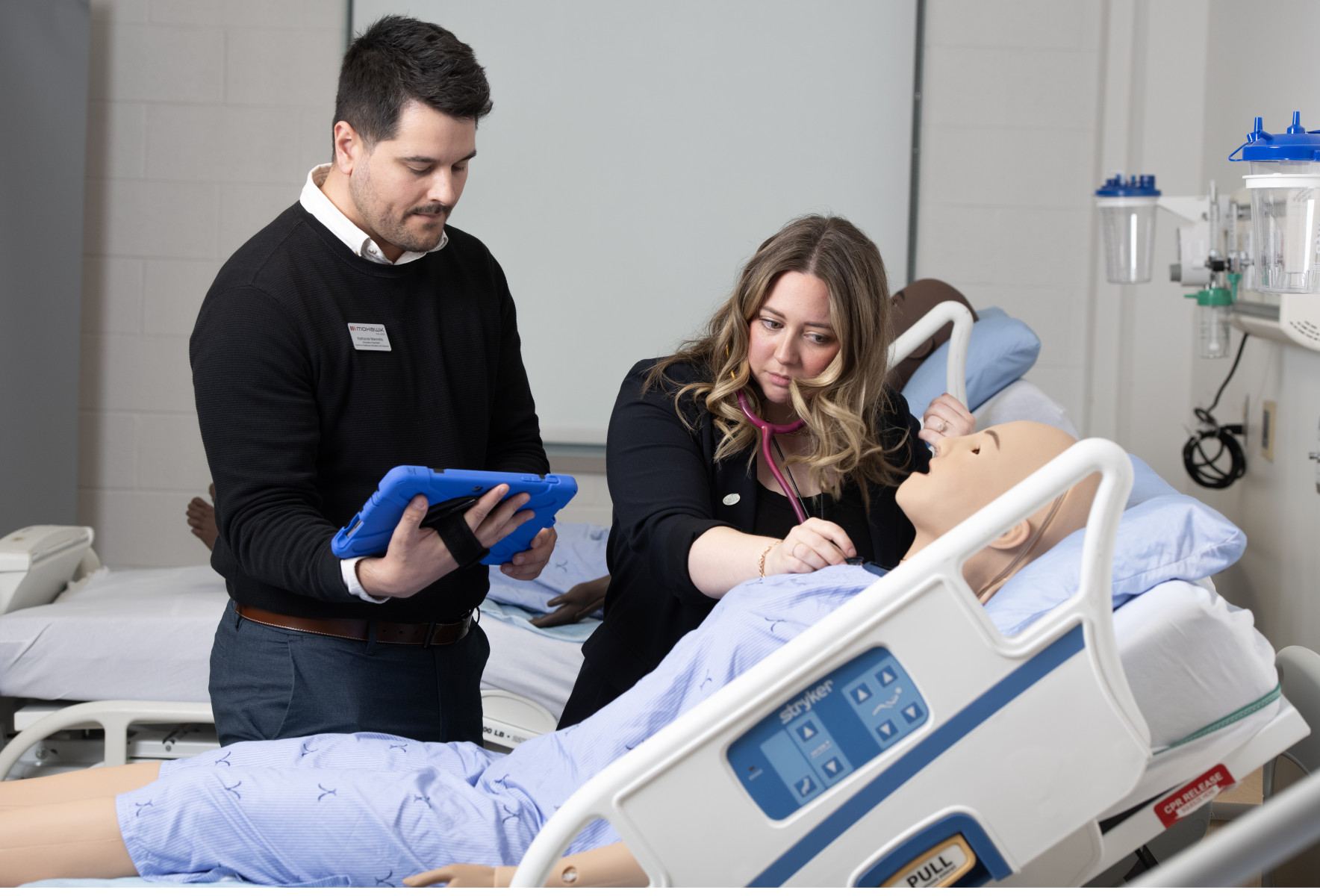
The high-fidelity manikins can bleed, urinate, blink, speak and breathe. They have pulses and blood pressure. They are outfitted with hospital bands, medical charts and patient histories. It’s all meant to add to the realism but also to prepare students for the routines of treating patients.
They are so life-like and embedded into the work at CHSR that they have been given names, including Apollo, Lucina, who can give birth, and Rayna, an infant who wiggles and cries.
During a tour of the space for an official re-opening in October, Apollo is in an ICU bed (the same ones used at Hamilton Health Sciences), having just emerged from a double bypass heart surgery. He’s got a bandaged chest wound and is hooked up to IVs and a catheter. Machines are monitoring his vital signs and from the control room, voices project over the room’s speakers.
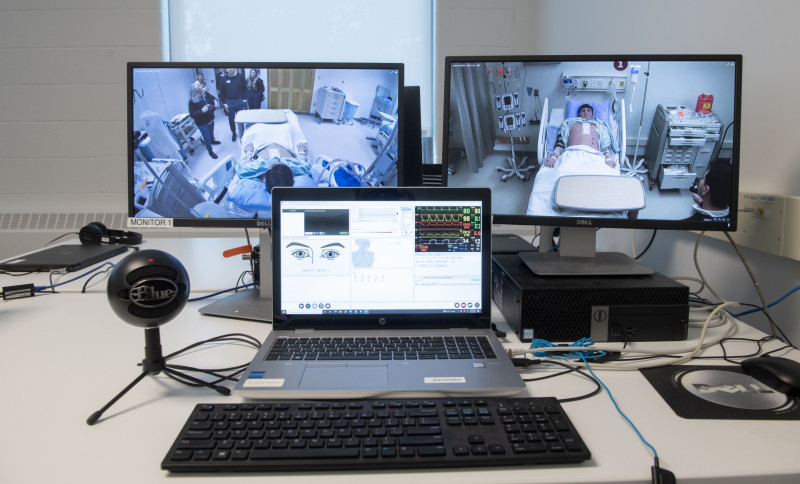
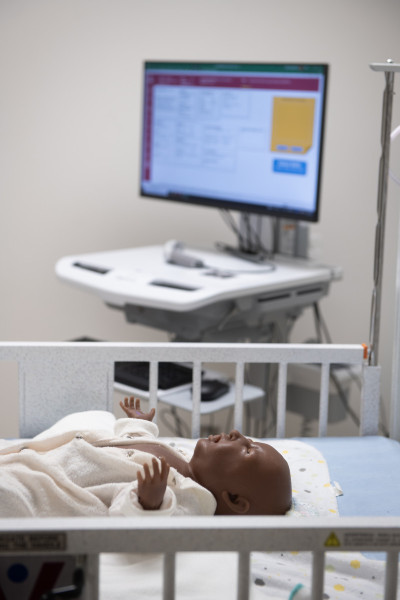
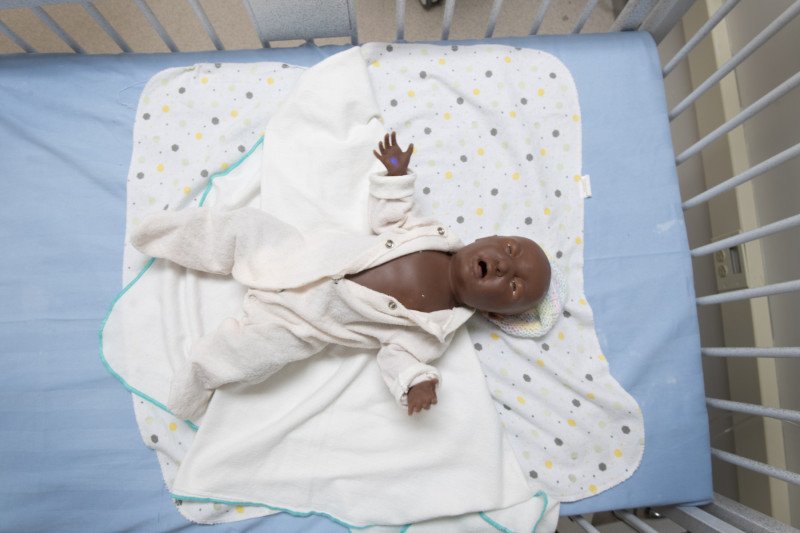
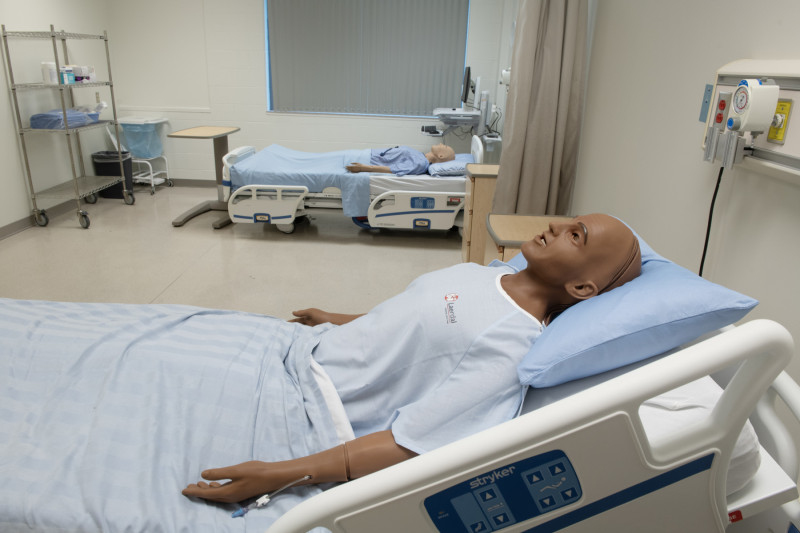
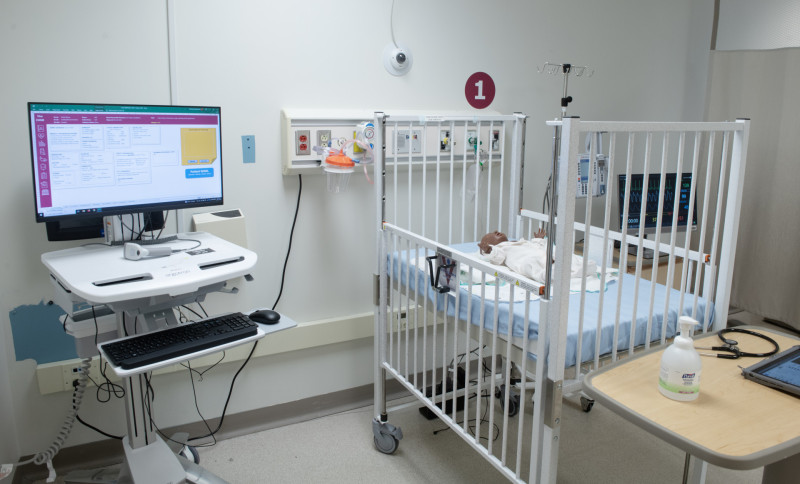
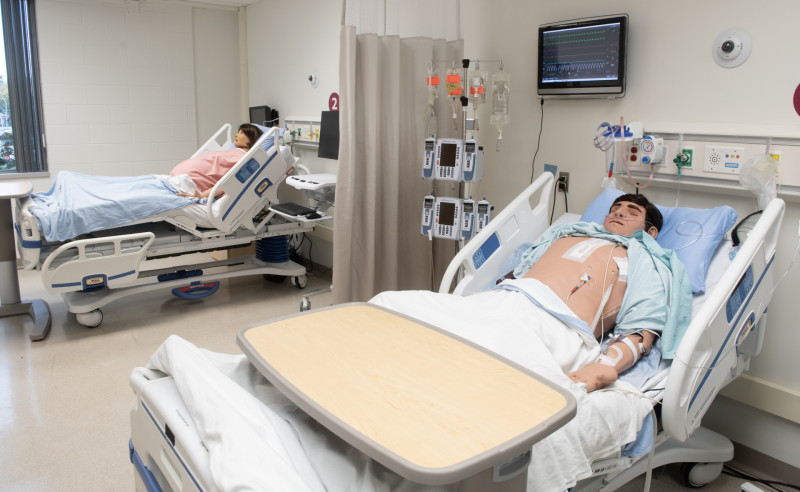
Simulations are used to build clinical skills and critical thinking, preparing students for everything from the routine tasks they will encounter on their clinical placements to very rare disease processes and complex situations.
Learners are supported through their experiences. They can pause a simulation to ask questions or seek guidance. Each scenario is recorded and evaluations are based on participation in debriefing sessions, rather than their performance in the simulation, where learners are expected to make mistakes.
Scenarios are built around interprofessional teams, preparing healthcare professionals to work collaboratively in team-based care settings, and also teach important non-technical skills like communication and leadership.
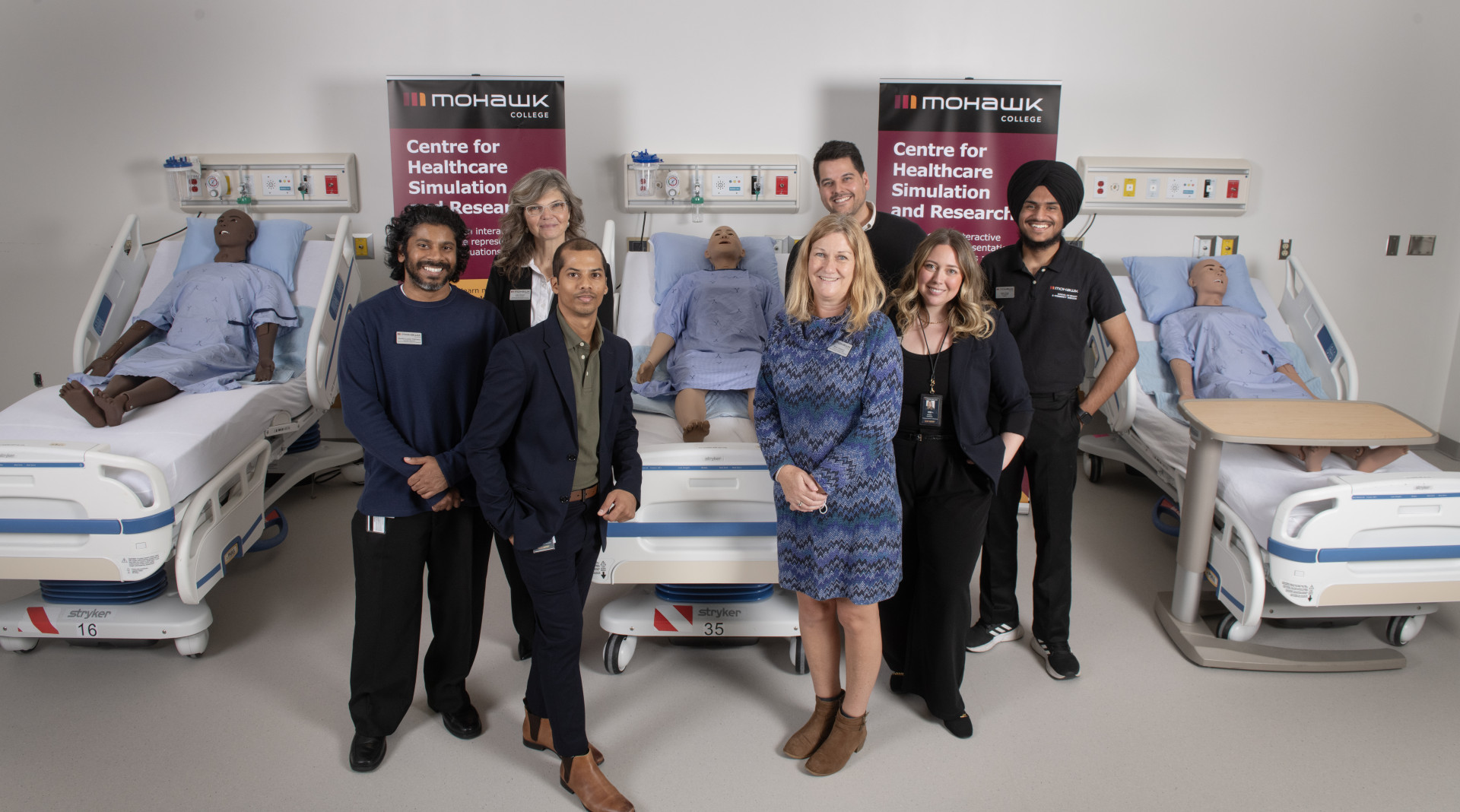
CHSR employs three simulation specialists – Lucky Pathirana, Nathaniel Mannella and Jessica Marsh – who are all registered nurses.
“We oversee the simulation from start to finish,” says Marsh, who joined the CHSR about four years ago.
“So we help to design the sims, collaborating with the faculty, and then prepare the students about the things that they need to learn beforehand. We also pre-brief the students, which is really important, because that's bringing them into the room a few minutes prior to the sim, creating a psychologically and physically safe space, and talking about their learning objectives. Then we operate the simulation, including operating the manikin behind the scenes, changing the vital signs based on what the students are doing and what interventions they're applying. And then afterwards, we'll debrief what happened in the simulation alongside the faculty.”
Marsh says simulation-based education has changed drastically since she graduated from Nursing 10 years ago, both in terms of the technology but also in the development of best practices for a whole new modality of learning.
Her healthcare training, which she received at IAHS, means Marsh is able to bring that knowledge to her role, along with empathy for and understanding of the viewpoint of learners.
“When they walk in the room, that patient is their patient to care for, and they have to decide, not only assess what's needed, but then decide on their interventions and implement them. So it just puts the students in this real-life setting, as realistic as we can create it, and then can really focus on their critical thinking and the steps they might do to care for that patient fully.”
In simulation, you're not just learning skills. You're learning how to think, act and respond like a professional, all while being supported and coached in every step of the process.

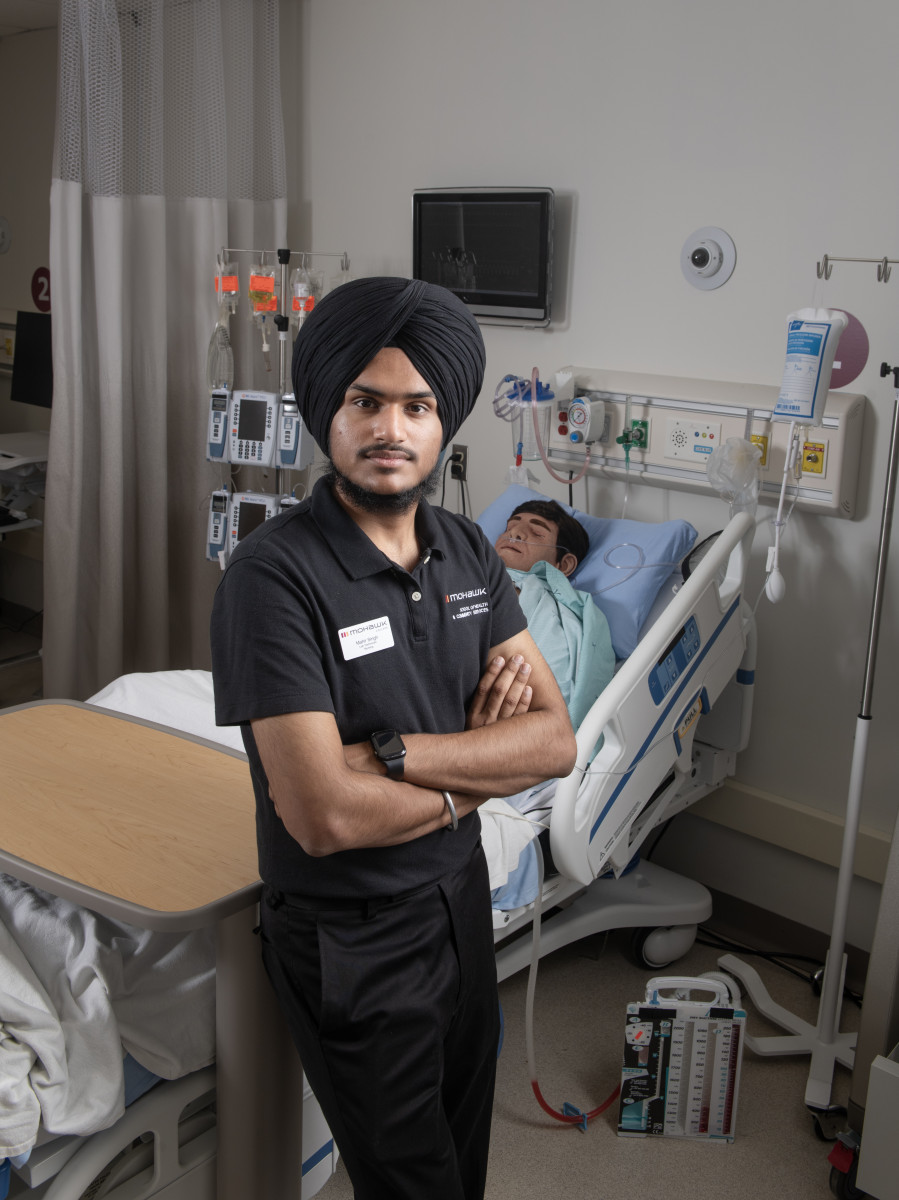
Mahir Singh, a recent Practical Nursing graduate, has worked at CHSR as a lab technician and instructor and has fond memories of his learning there.
“As a student, coming into the simulation centre was always something to look forward to. It wasn't just another class for me. It was a chance to put all those lectures and labs into practice to see how things really work. And most importantly, it was a safe environment where you could make mistakes and learn from them without real-world consequences. That's the magic of simulation. No one is expected to be perfect, but everyone gets a chance to improve,” Singh said at the official re-opening ceremony.
“It's more than just a room with manikins and medical equipment. It's a space where students can build confidence and learn critical decision-making skills and develop the instincts they'll need in real-life situations. In simulation, you're not just learning skills. You're learning how to think, act and respond like a professional, all while being supported and coached in every step of the process.”
Singh recently accepted a full-time RPN position with Hamilton Health Sciences. Fully engaging in simulation training is the difference between being a good nurse and a great one, he said.
“I will bring everything I've learned in this space to my work as a nurse.”
The CHSR also employs simulated participants, actors who take on roles of patients, loved ones and healthcare practitioners and is also piloting the use of VR environments to create immersive training scenarios. Learners can navigate through virtual hospitals, interact with lifelike virtual patients, and use medical equipment and diagnostic tools to perform procedures. VR technology allows for consistent and standardized training experiences and remote accessibility.
“We embed many types of simulation into learning here,” says Julia Hansen, Director of Simulation Strategy and Interprofessional Learning. “We take a scaffolded approach, building up to high-fidelity and more complex scenarios.”
But one thing is always expected: when students walk through the doors to the centre, they are treated like healthcare professionals, she says.
Ariane Simbahan, who graduated this year from the Occupational and Physiotherapist Assistant program, continues to work part-time in the CHSR in addition to a position helping with the rehabilitation of stroke patients at HHS’s Regional Rehabilitation Centre.
Simulations don’t have to be high-tech to be effective, says Simbahan. Many involve teaching students how to react to the actions and behaviours of patients who may be angry or panicked or how to deal with loved ones who may interfering with treatment, for instance.
There are areas set up as a kitchen and a washroom, where students can practise teaching life skills or practise getting patients in and out of the tub, for instance.
She said her learning within simulated patient environments reduced the anxiety of her first time in a hospital.
“I just felt like I done it before so I wasn’t that nervous.”
Mohawk College has led the use of simulation in healthcare education for nearly a decade, says Wendy Lawson, Associate Vice President Academic and Dean of the School of Health.
The relaunched CHSR is a demonstration of the college’s ongoing commitment to excellence and innovation, she said.
“As healthcare professions and practice models transform, we continue to adapt to offer world-class experiences to our students and to partner with our community in solving complex health system challenges. By bringing the newest technology together with our exceptional faculty and staff teams, we will continue to lead in this space, building capacity, advancing interprofessional education and engaging in research that improves patient outcomes.”
As long as the need for healthcare professionals continues to grow, we're going to grow with it, ensuring our students have access to the best training available in Canada.
CHSR will be used by workforce partners through Mohawk College’s Centre for Professional Advancement, which offers customized training and curriculum delivery that can be delivered online, in-person, or using a blended approach. It will also provide valuable data on learner performance and help with the development of innovative tools and technologies.
“Whatever the activity – healthcare programming, applied research, customized in-demand training – there is magic happening here,” said Lawson, who was among the first cohort to graduate from the IAHS campus.
Paul Armstrong, President of Mohawk College, was part of the planning of IAHS from its outset.
“The revitalization of this simulation lab represents a steadfast commitment to innovation, technology, and growth—values that have been at the heart of a 25-year journey, and this journey is far from over.” said Armstrong.
“As long as the need for healthcare professionals continues to grow, we're going to grow with it, ensuring our students have access to the best training available in Canada."
This story originally appeared in Momentum Magazine.