
Mohawk College collaborates on industrial waste heat recovery project
Read time: 8 mins
The Centre for Climate Change Management has worked with Hamilton Community Enterprises on a district energy project to convert bayfront thermal emissions into heating for city buildings
The Centre for Climate Change Management (CCCM) at Mohawk College is playing a key role in the path to realizing a vision to harvest industrial waste heat for space and water heating in buildings in the lower city of Hamilton and beyond.
Applied researchers at the CCCM evaluated a range of thermal storage technologies that could be employed by Hamilton Community Enterprises (HCE) in a future thermal corridor emanating from the industrial bayfront.
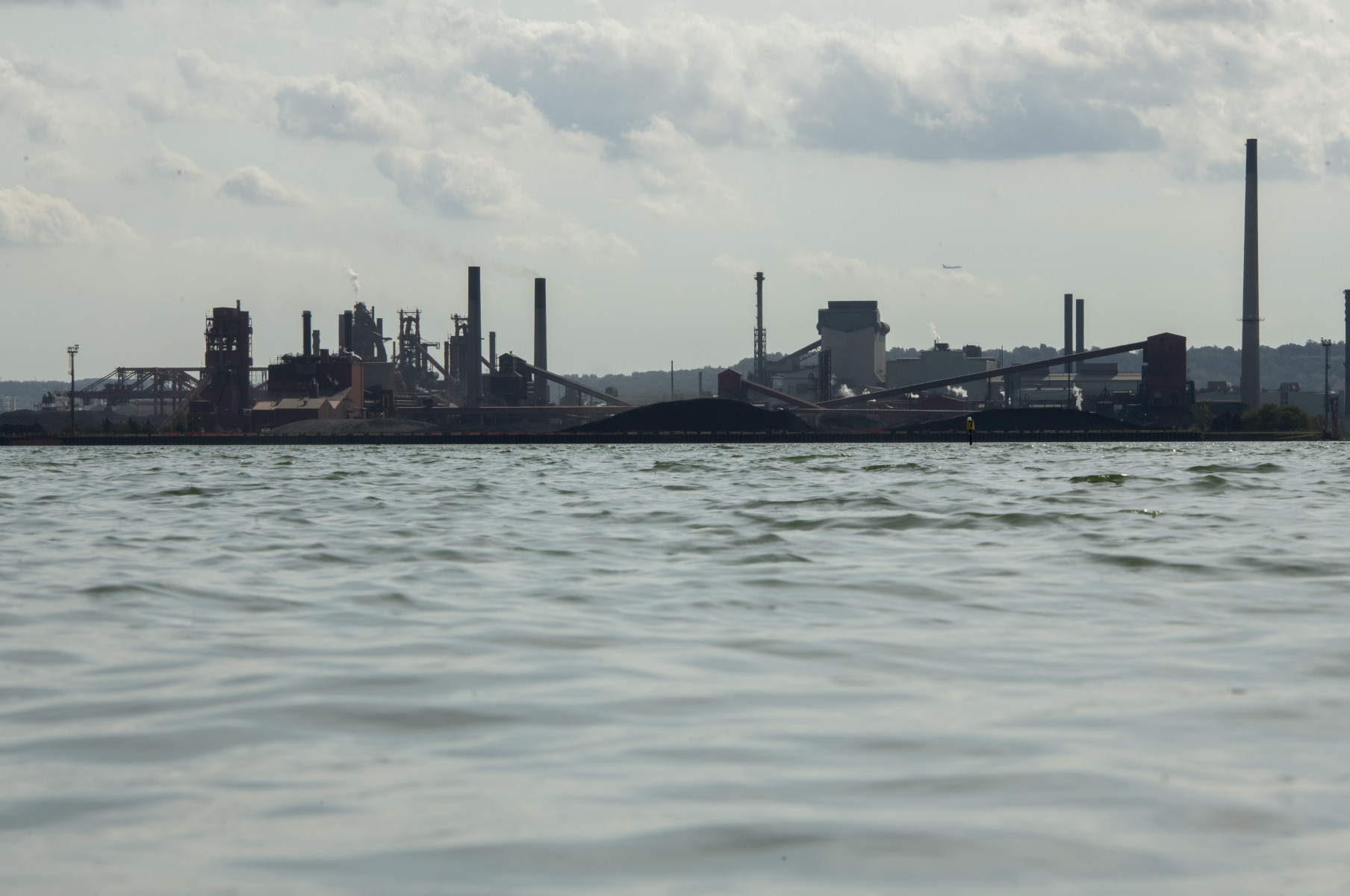
In 2021, the Hamilton Chamber of Commerce released a report revealing that a representative group of surveyed companies within Hamilton – far from an exhaustive list – produced enough waste heat to heat approximately 45,000 homes, potentially displacing 200,000 tonnes of carbon emissions annually.
“The report found that there is a tremendous opportunity to use industrial waste heat for other purposes, one of which was building heating. As my boss says, there is a Niagara Falls of heat sitting on our bayfront,” says David Inkley, HCE’s Vice President of Engineering and Development.
“This all ties to the reduction of carbon. The biggest contributor to carbon in the city of Hamilton, after industry, is buildings and heating buildings.”
The vision is for a five-phase project over 10 years that results in a commercially viable business, provides an income stream to the industrial suppliers of waste heat, supplies dependable, reliable heat for buildings, both existing and new and ultimately creates “Canada's Thermal Corridor.”
“The report found that there is a tremendous opportunity to use industrial waste heat for other purposes, one of which was building heating. As my boss says, there is a Niagara Falls of heat sitting on our bayfront,”

Commercial viability
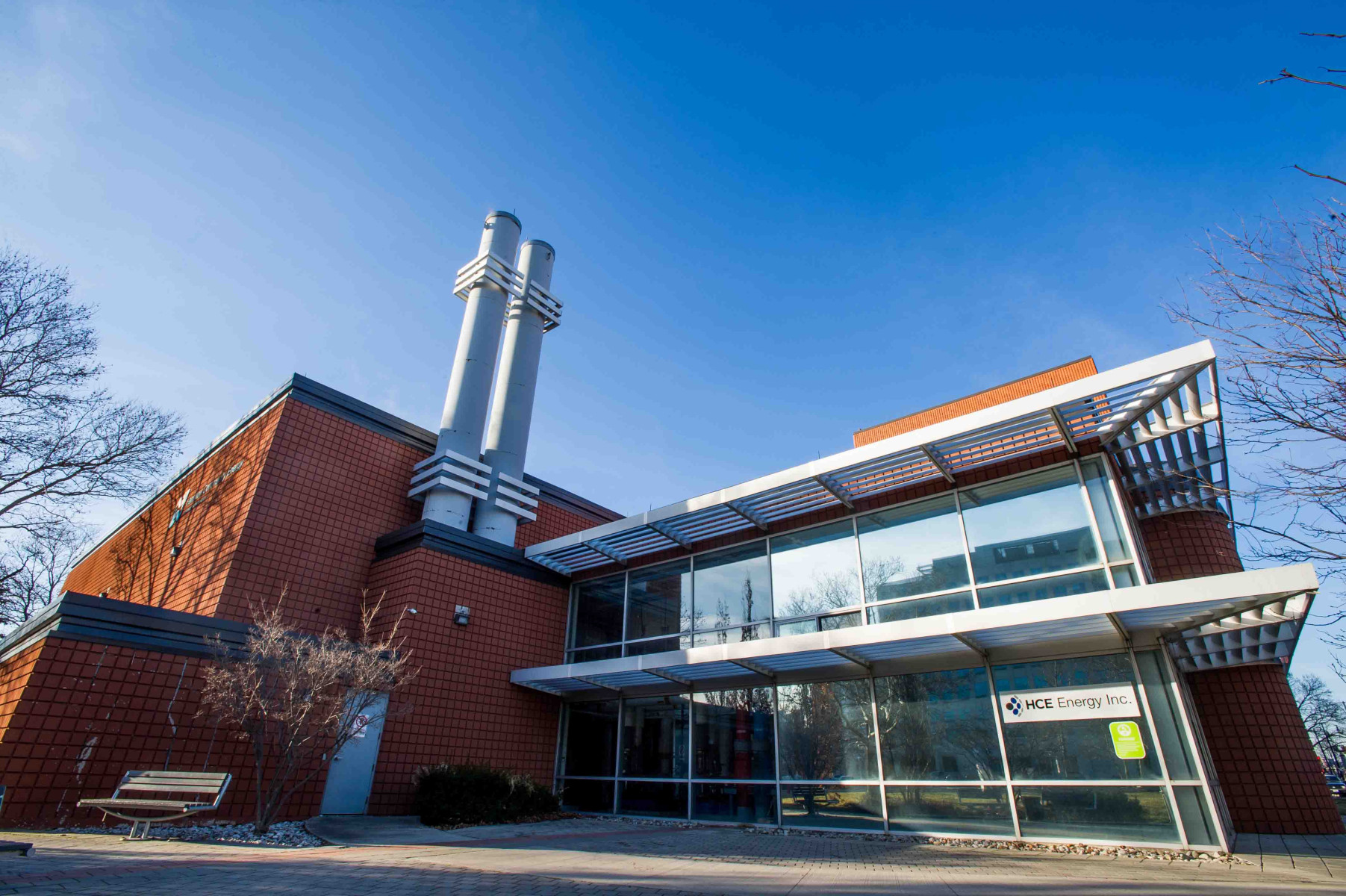
HCE is a for-profit corporation that is wholly owned by the City of Hamilton.
It finances, designs and operates sustainable, resilient and low-carbon heating and cooling, electrical and data networks across the GTHA.
HCE’s downtown district energy system produces hot water at its central plant, which is then piped underground to heat and cool buildings covering two and a half million square feet. It also operates a district energy system at McMaster Innovation Park.
After defining the opportunity, HCE launched an Energy Harvesting Study to assess the commercial viability of taking waste heat from Hamilton’s nine-kilometre industrial bayfront to feed into and expand HCE’s existing downtown district heating network.
The two-year study, expected to be complete by the end of the year, has identified a large and growing thermal demand zone in Hamilton, extending from the downtown core to the city’s north end and several waterfront areas, and including central portions of the LRT now in development.
The study will map preliminary routes for installing insulated underground pipes, linking energy providers to users. These routes pass a number of large-scale purchasers of space heating – including hospitals, schools and public housing – that could become anchor customers of a thermal corridor.
“I think where we really add value at the Centre for Climate Change Management is in de-risking pathways forward"
Assessing thermal storage options
McMaster’s W Booth School of Engineering Practice and Technology engineering school has been deeply involved in the policy research framing the waste heat recovery project, but when it came to investigating competing technologies, the partners knew the place to turn was the CCCM, says Inkley.
Thermal storage is critical to using waste heat to heat buildings. District energy systems use hot water to heat buildings and thermal storage captures heat when energy prices are low in order to access that hot water when prices are high.
Project lead Nico Strabac says Mohawk College’s contribution was a “technical scan and feasibility assessment of thermal storage technologies, and if and how they can be integrated into this energy harvesting network, as it is being proposed.”
That included looking at how other district heating systems with thermal storage technology across the world operate, what they cost and what are implementation factors to be considered.
“I think where we really add value at the Centre for Climate Change Management is in de-risking pathways forward,” said Strabac.
“So part of what we did was survey, consolidate and assess information about both conventional as well as cutting-edge thermal storage technologies, and speak to their cost and their fit with the heat harvesting network that HCE is considering. And then last, but not least, pointing out the potential technologies, or buckets of technologies, that have high fit with their needs.”

Mohawk a ‘major plus’
Inkley has high praise for Strabac and the team at CCCM.
“We were really impressed with how they grabbed the baton and just took it and ran with it. They were excellent project managers. They made a plan and they stuck to it. They kept updating us. They made sure we were in the loop but we didn’t have to drive the bus. They were very independent. They just took care of it,” says Inkley.
“That was such a big plus for us and we look forward to working with them again.”
Strabac was even able to line up project funding through NSERC and the Mitacs Accelerate Program to help offset some of the research costs.
“Mohawk College’s engaged teaching, learning and research is something that is really important to our community, and the fact that we have Mohawk doing that style of applied research in Hamilton is a major plus for us,” says Inkley.
“HCE could have hired a consultant to do this work but there is much more value in working with a local college and university. It’s important to build a pipeline of next-generation talent in decarbonization and innovation in Hamilton. Hamilton Community Enterprises has a history of hiring students from local colleges and universities, so this is a natural fit for HCE. If we're going to change and move forward, we have to work with young people and our educational institutions to make that change happen.”
Amjad Alkhateeb, a graduate of McMaster’s engineering and public policy program, was hired by CCCM to work on the thermal storage project.
“We tested or examined both the technical viability and the economic viability of thermal energy storage. So I developed a software program that uses different kinds of parameters and scenarios based on different prices for natural gas, for electricity and for the price of the waste heat itself coming from the supplier sites, along with peak usage.”
The software calculates cost savings, payback period and return on investment employing various technologies.
Alkhateeb says he gained valuable experience in working with partners to understand their operations, their needs and their constraints.
“It’s been a very good professional experience interacting with all of these people at these companies and institutions.”
This story originally appeared in Momentum Magazine.
The CCCM was launched in 2017 to drive measurable and coordinated regional action on climate change among business, industry, government and community partners.
“We are responding to workforce needs and changes in our economy and helping the region move to the low-carbon economy in a way that helps small businesses, big businesses and community organizations,” says Kate Flynn, general manager of CCCM.
“We are part of Mohawk College’s larger commitment to act as a regional anchor institution that helps to accelerate solutions with hands on, collaborative applied research that gets solutions out of the lab and into the field.”
At CCCM, students learn how to evaluate decarbonization solutions that could work to see what it will take to make them work, says Flynn.
“Decarbonization is a tall order. It's really hard, and it requires a lot of commitment and collaboration. Our role is to de-risk and accelerate solutions and that has a really big impact. The time imperative of this disruptive transition to a low-carbon economy and how complicated it is for companies large and small means the applied research and workforce training we do is so important. We’re trying to help companies navigate a really complex time.”
But the work of the CCCM is also helping to support a cleantech industry in Ontario and Canada by helping innovators get to market faster.
To date, CCCM has supported more than 30 cleantech companies, partnered with heavy industry on solutions to reduce carbon emissions by 110,00 tonnes annually, supported more than 25 deployable cleantech solutions and leverage more than $1 million in grants for partners annually.
“I think there's tremendous opportunity to sell solutions globally and that translates into job creation.”
CCCM complements the impact of the Mohawk College-led Canadian Colleges for a Resilient Recovery in the rapid training of low-carbon skills, and has been involved in the development of the curriculum to be embedded in the soon-to-be launched School of Climate Action.
The Mohawk College Centre for Climate Change Management appreciates the funding from its partner, HCE, and funders. We acknowledge the support of the Natural Sciences and Engineering Research Council of Canada (NSERC). This work was also supported by Mitacs through the Mitacs Accelerate Program.
“We hear so much from industry about the pace of change, and the struggles with trying to get the right people in place and to reskill and retrain people.”
While there are other centres and institutes at colleges that are working in climate change, CCCM is unique, says Flynn.
“We are interdisciplinary, and we do a lot of techno-economic analysis where we're trying to figure out the social, political, economic and technological context of implementation. I haven't come across something exactly like us.”
For more information visit the website: The Centre for Climate Change Management