
A roadmap for climate action
Read time: 6 min
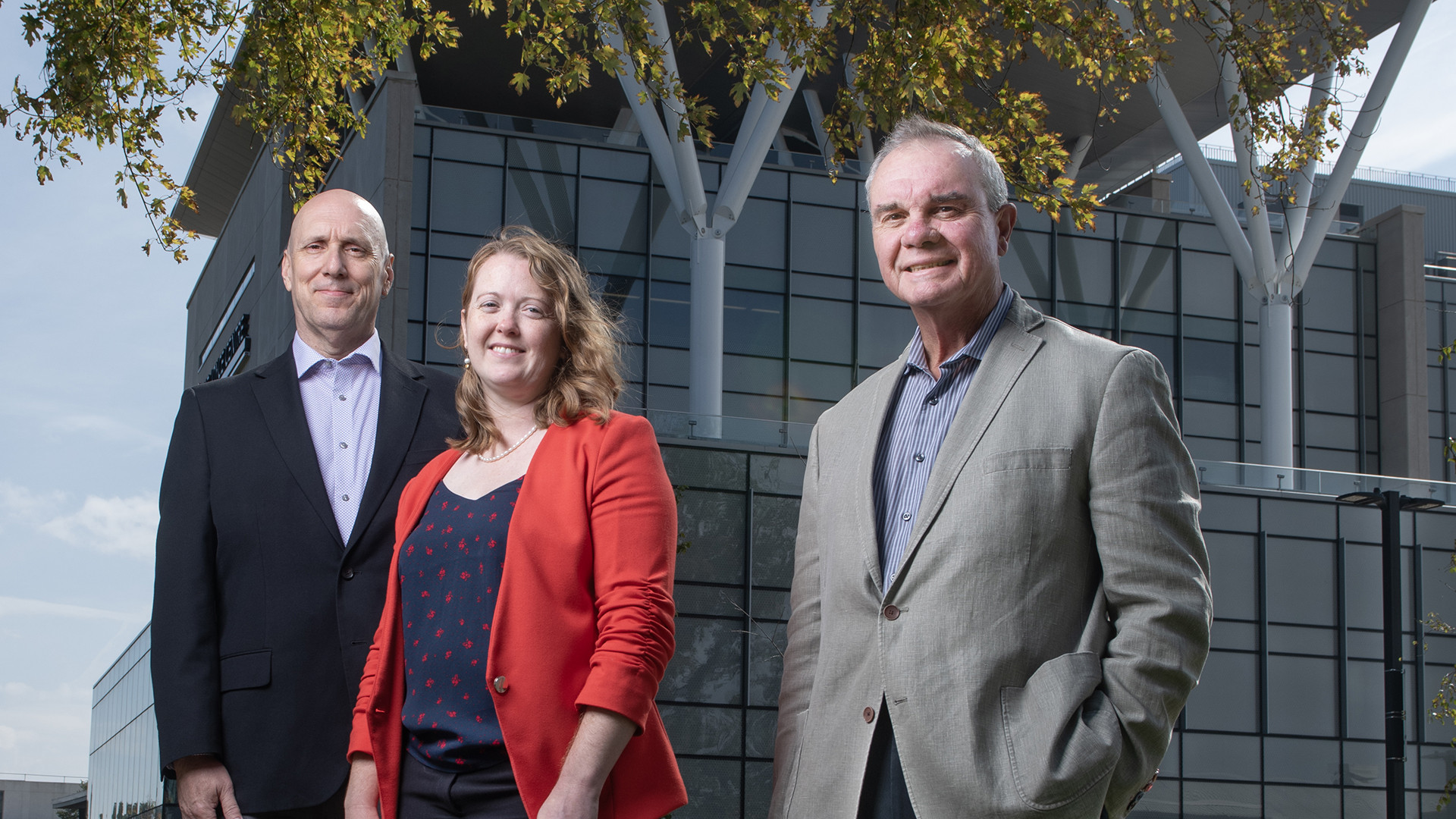
Mohawk College’s transformational Climate Action Plan sets a net-zero target for 2035, along with advancing sustainability within student learning and applied research.
A Climate Action Plan releasing this fall is Mohawk College’s transformational roadmap to fight climate change and prepare for a low-carbon economy on three fronts: direct operations, education and training, and applied research and partnerships.
The plan’s target is to achieve net-zero carbon in direct operations – buildings and fleet – by 2035. The plan also focuses on embedding sustainability and climate action into curriculum across the college’s programming, providing extracurricular opportunities and encouraging a sustainability mindset.
“We are training our students to lead and participate in the coming transition to the low-carbon economy,” says Allison Maxted, Manager of Sustainability.
A new comprehensive School of Sustainability and Climate Action will advance education and training elements that are foundational to the Climate Action Plan.
“What sets our Climate Action Plan apart is that it looks at climate action in a holistic way,” says Maxted. “The impact of an educational institution extends well beyond its operations. We are critical to the workforce development and applied research that will move us forward.”
Mohawk College has made it a strategic pillar to make a measurable impact on climate change, says Henry Colyn, Chief Building and Facilities Officer.
“The Climate Action Plan is a roadmap to a destination. We have set aggressive targets for our operations, including an 85 per cent reduction in Scope 1 and 2 greenhouse gas emissions by 2030 based on a 2007 baseline. To achieve that, we are making a significant investment in technology.”
That includes an additional electric boiler, along with conservation efforts and systemic changes to campus practices. Every future deferred maintenance and capital decision will be guided by the plan’s targets. The multilayered strategy will focus on electrification, conservation, storage and on-site generation.
“Our targets are ambitious but they are achievable. It will require a great deal of planning,” says Colyn.
The Climate Action Plan also sets out a proposal to grow the college’s research impact in the realm of climate solutions.
Mohawk College is working with more than 25 companies on complex and challenging decarbonization strategies, along with a number of municipal governments, start-ups and small clean-tech businesses, says Kate Flynn, General Manager of the Centre for Climate Change Management (CCCM).
“The whole plan is about the successes we’ve had and how we will dive into the next deeper level and lead in this space. The next phase is about expanding our advanced research and doing more things better.”
CCCM is the centre of this research, along with the Energy & Power Innovation Centre, the Sensor Systems and Internet of Things (IOT) Lab, and the work of Tony Cupido, who holds a research chair in sustainable building technologies.
“There are so many facets because climate change touches many aspects of our economy,” says Flynn. “We are engaging in more research across the college in interdisciplinary spaces.”
Each of the Climate Action Plan’s pillars has a sponsor from the College’s Senior Leadership Team. A college-wide Steering Group will oversee the implementation of the plan and provide knowledge and expertise to ensure commitments to sustainability and climate action are reflected in planning and decision-making.
Working groups will advance specific areas and the plan identifies guiding principles for incorporating Indigenous concepts of relationships and sustainability.
The Climate Action Plan builds on a longstanding legacy in sustainability. Mohawk College has had a comprehensive environmental management plan in place since 2011 – the first college in Ontario to do so – and has prioritized climate action within its overall strategic plan.
It has been named one of Canada’s greenest employers 10 years in a row and holds a STARS® Gold rating from AASHE (Association for the Advancement of Sustainability in Higher Education) for sustainability achievements.
Mohawk College has also founded Canadian Colleges for a Resilient Recovery, a national coalition of 14 colleges, cégeps, institutes and polytechnics that is leading the transition to a low-carbon economy, and opened The Joyce Centre, Canada’s first net-zero carbon institutional building.
“Mohawk College serves as a model of what an institution can look like as it moves into the next phase on climate action,” says Flynn.
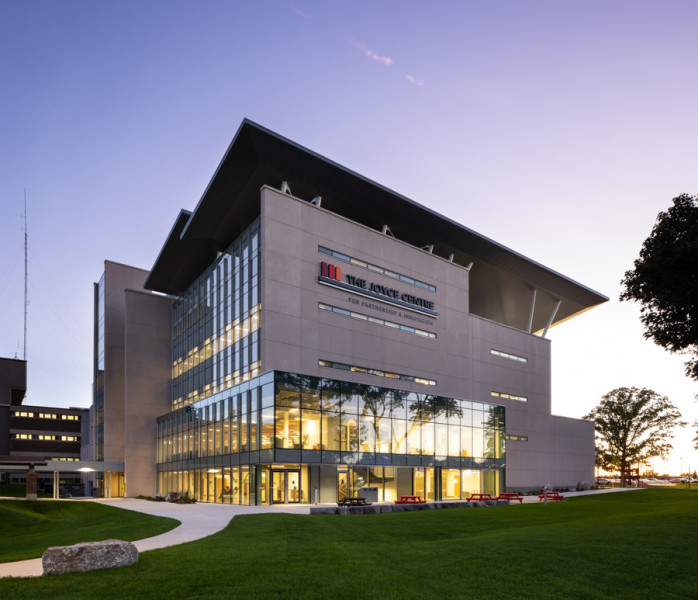
Five years of The Joyce Centre for Partnership & Innovation
The Joyce Centre for Partnership & Innovation, Canada’s first net-zero institutional building, has inspired many other such buildings and has welcomed thousands through its doors since it opened five years ago.
That includes everyone from local elementary school children to engineers and scientists from across the world, says Tony Cupido, Mohawk’s Research Chair in Sustainable Building Technologies.
He’s led hundreds of tours and the building has hosted numerous conferences for organizations that promote zero-carbon, lowenergy buildings, as well as engineering and architecture groups.
“With respect to its design and construction, this building was ground-breaking. Nothing on this scale had been done before. From a knowledge point of view, this building has contributed a great deal. I think it’s fair to say that virtually every Ontario university and college, and many others, have visited The Joyce Centre.”
Cupido recently led a tour for Hamilton Mayor Andrea Horwath and her team who are searching for efficiencies in the city’s operations of fire halls, police stations, arenas, community centres and other public buildings.
The Joyce Centre has served as a “backbone for student learning” within curriculum, capstone projects, and applied research, says Cupido.
Students have analyzed the performance of the water quality produced by the rainwater harvesting and filtration system, the building’s system of solar panels, the green roof, and its geothermal heating and
cooling system.
“The thrill is the interest of students in this building, the projects they do and the outcomes they find. Seeing students learn from this building is very rewarding. They will have better knowledge about what buildings can be because they’ve lived and breathed in this building.”
There is now five years’ worth of data on the building’s performance, says Henry Colyn, Chief Building and Facilities Officer. Data is submitted each year to the Canada Green Building Council in order to maintain the building’s zero-carbon certification.
It’s performing as well or better than we ever expected and it proves it’s possible to achieve net-zero targets in a large-scale building.”

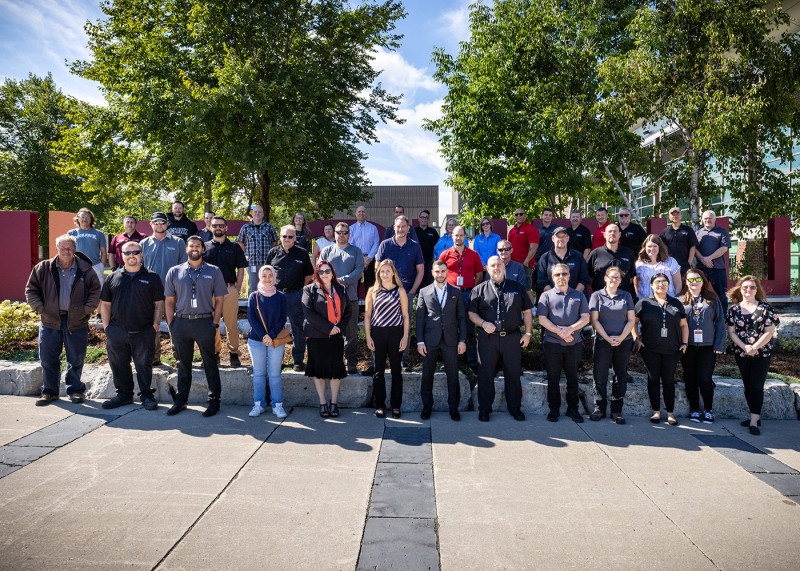
“We have an amazing team of people who operate that building. It’s very technically advanced and it requires technically advanced people skilled in energy, electrical, mechanical and building automation to operate it. It’s not just built and left to run, it needs constant monitoring and adjustment. The ongoing success of this building is 100% due to amazing facilities team we have assembled to operate it.”
This story originally appeared in Momentum Magazine.